Where’s Marco?#N/A
Everyone on one live map.
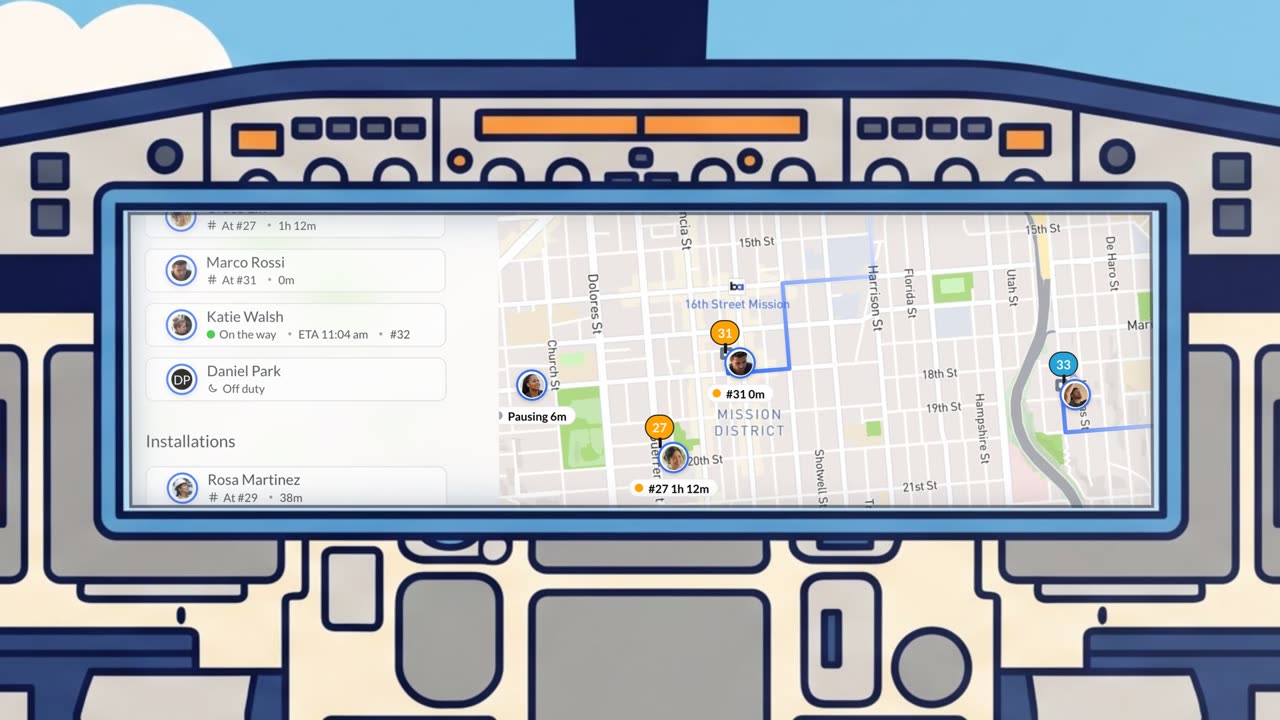
Every phone on your team is a dot on the map in your web dashboard, moving as they drive. You see who is closest before you call anyone. Nobody is “possibly in Fresno.”
See the live map →Flying Blind · A short film · 0:56
A spreadsheet holds the plan. It can’t tell you where your technician is right now, when he’ll get to the customer, or whether he was there at all.
What’s really at stake
You built this business on phone calls, a spreadsheet and a good memory. It worked. That’s how you got here.
But a spreadsheet only knows what someone typed into it this morning. Then a job runs long, a van breaks down, a customer moves the appointment, and from that moment on you’re guessing. Everyone around you stopped guessing a while ago.
They follow their pizza to the door. Then they take a morning off work to wait for you “between 8 and 12.” They don’t compare you to the company down the road. They compare you to every app on their phone.
Somebody in your town already sends a link with the arrival time, and a photo when the job is done. The next time your customer books, that’s who they’ll call.
Good technicians don’t want to call in every hour or piece the week’s hours together on Friday. They want the next job on their phone, and a record that backs them up when a customer says nobody came.
The morning goes to phone calls. Where are you? Are you done? Can you take one more? Every one of them is a question a map would answer.
Miles driven because the route was put together by hand. Hours written down from memory. Work that was done and never billed, because the paper never came back.
Everything runs through your head and your phone. That works with two vans. Every van you add is one more thing only you know, and one more reason you can’t take a day off.
Field service is splitting in two: the companies that can see their day, and the ones still guessing.
Staying on spreadsheets is a decision too.
Where’s Marco?#N/A
Every phone on your team is a dot on the map in your web dashboard, moving as they drive. You see who is closest before you call anyone. Nobody is “possibly in Fresno.”
See the live map →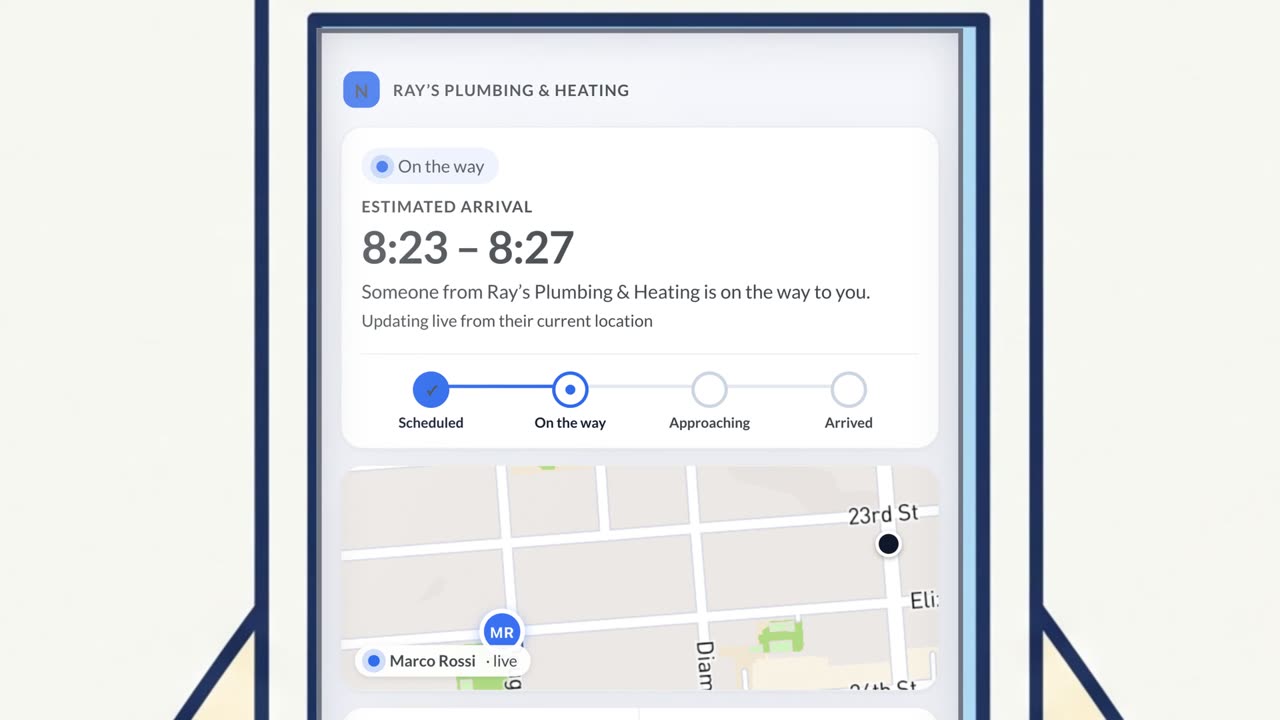
When does he get here?#VALUE!
Every visit gets its own arrival page. Your customer opens the link and sees when he’ll be there, updated as he drives. No app, no login, no calls to ask.
See the arrival page →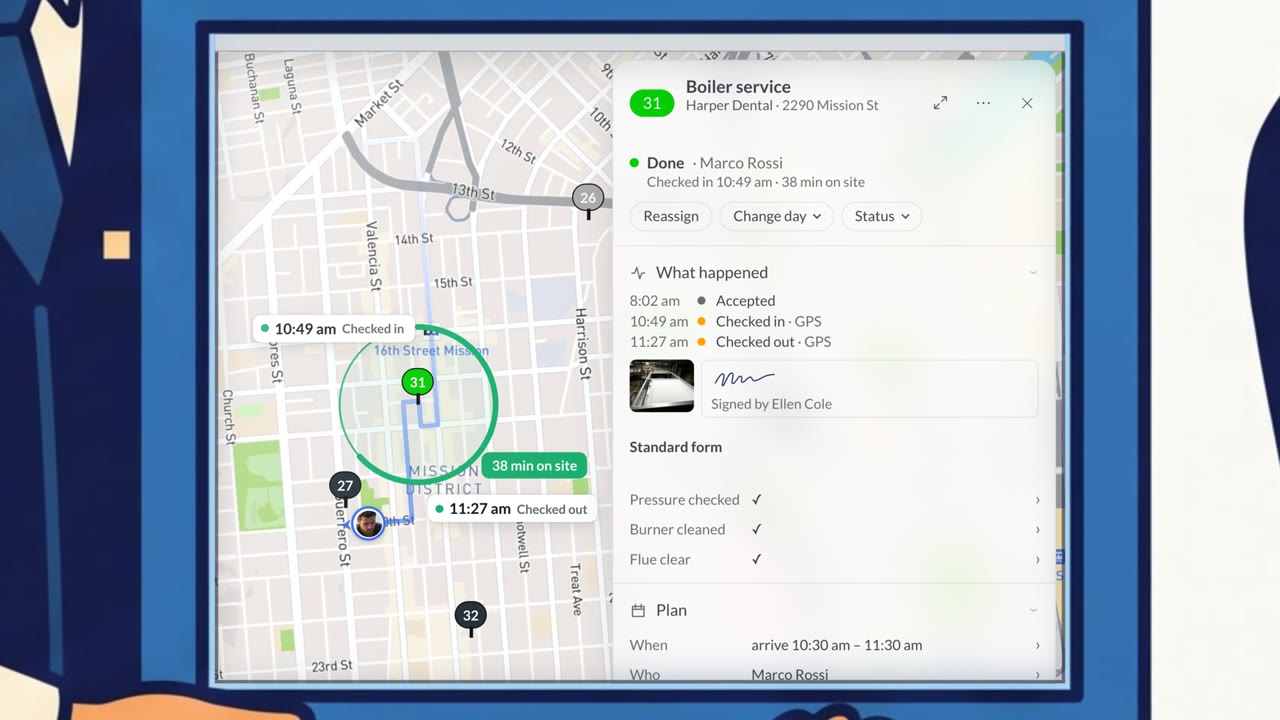
Was he even there?#REF!
His phone checks him in when he arrives and out when he leaves. His photo, the customer’s signature and the form land on the same job. When someone says nobody came, you don’t brace. You show them.
See proof of every visit →“We’re too small for software.”
Madison Valley Waste had no routing software at all. The smaller you are, the faster you’re set up.
“Hellotracks was our first routing software, and the setup was simple. We were up and running in one day.”
“Phone calls work fine for us.”
Until the phone rings while you’re on the phone. At Sherman Abrams Laboratory it took one call to find a driver, another to hand out a job and another to confirm a pickup.
“Since we started, we have fewer phone calls and less paperwork, and our information is much easier to access. To anyone in logistics I would say: get them now.”
“My guys won’t want to be tracked.”
Tracking follows the working hours you set and stops outside them, and your team sees that in the app. And the record is on their side, too.
“Clients cannot dispute that we showed up. That has been the biggest change for us day to day.”
“I don’t have time to switch.”
Rees Construction had every crew on the map in about an hour. Madison Valley Waste was up and running in a day. And the first 30 days are free, with no credit card.
Paste it or upload it. Every row becomes a job: who, where and when. You don’t start over. You start from what you already have.
They install the app on the phones they already carry. Nothing goes into the trucks. Tracking follows the working hours you set and stops outside them.
The same day, you see everyone on one map. Routes are put in the best order, customers see when their technician will arrive, and every visit leaves a record.
Hellotracks runs on the phones your team already has. You can be live today.
Free for 30 days · No credit card · No hardware
